Monday, 29 September 2014
Elton John - Don't go breaking my heart
1) What have you learnt about filming music videos?
What this exercise has taught me about filming music videos is that filming in full shots of the performers singing the song is more effective than taking separate clips of the performers singing sections or lines from the song as it means that when it comes to the editing of the final video as a whole, components such as lip syncing is much easier. I have also learned that energy and performance is key to a successful music video in order to keep the audience engaged and entertained by the content of the music video. This means that when filming a music video a bit of effort in relation to the mise en scene can make it much more successful and appealing to an audience.
2) Describe the editing process
The editing process of the exercise taught us many things about editing in the tone of a music video. We ended up having to go to film our video twice based on the fact that on the first occasion, we did not obtain full shots of us performing the whole song and when we brought the sequences back to edit them, it was tricky to get the lip syncing correct with the song and we found that when placing the clips next to each other, the continuity and look of the video was unattractive and this made the video as a whole rather unappealing.
After filming again with a three shot set up to the video and carrying out the takes in full shots rather than separate clips, the editing became much more easier and made our video look much more professional and appealing in relation to the previous one. After importing each video onto the mac, we layered the videos together on Adobe and matched them up to the song in order to get the lip syncing in the video correct. We could then lock the main master shot and the track so that the lip syncing is not tampered with. We then began to cut layers one and two with a shot of one performer and a shot of another in each sequence, often referring back to the master shot so that there is a mix between the shots.
When I was singing, we cut Leigha's bit so that I could be seen on the video and vice versa when Leigha was singing. I tried to move between each shot as much as possible with the editing of the video so that it keeps the content lively and engages our audience. After, we were satisfied with how our video looked as a final product, we were then able to export it and upload it to Youtube.
3) What have you learnt about editing music videos?
From this experience, I have learnt that editing music videos means more frequent cutting of different clips in order to match the content on screen to the pace and tempo of the track. It is different from past experiences such as editing the thriller opening where the editing is abrupt and you have to consider the editing of the video in relation to the soundtrack. Also, it is important to understand that the editing for the music video is easier using the layer method with the full shots on top of each other where you can simply cut each layer when you don't want it to be seen and other layers can then be seen. This means that there is less stress when trying to match up individual clips and get the lip syncing right.
4) In what ways could you improve the filming/editing of the sequence
There are various ways that we could have improved the editing and filming of the music video. Firstly, our media department had a dolly eligible for use when working on this task, this could have improved our range of shots and made our video more diverse, attractive and stylistic to the outer audience. This would further mean that I would have built on our original stimulus which was the original Elton John video where they only had a three point filming set up. This would show me using my initiative and being inventive with our work. Furthermore, while editing the video, I could have used a wider range of transitions to get between each shot which may make the video more appealing and stylistic to the audience. This would also show me using more advanced features of the editing software. I will keep this in mind when we begin to edit the video we make for our main coursework task.

Friday, 26 September 2014
History of Pop Music
1940s
- The History of Pop music can be traced back all the way to the 1940s starting with artists such as Bing Crosby who was known as the biggest star in the world throughout this period.
- Based on the fact that the Pop music video was roughly 25 years away from this period, there was no way for fans to see Bing on Television and in concert
- This meant that the only way for audiences to see Bing was in films with other supporting artists such as Dean Martin who also was known worldwide by audiences.
- This establishes the preliminary stages of Pop music with Bing being one of the founding Pop artists. This opened a door to a new style of Music to capture audiences worldwide ever since.
1950s
The 1950s period established new artists who identified intensely with the Pop genre and gained global success and popularity through their music and talent.
- Frank Sinatra was a star throughout the 1950s period within Pop music and a heartthrob for young girls following pop music at the time.
- Sinatra's fame had been steadily building. His breakthrough came in his first Paramount season in December 1942, when the theatre erupted with "five thousand kids stamping, yelling, screaming, applauding". These scenes only intensified during his return in May 1943.
- Frank Sinatra drew much attention from young girls who wore Bobby sox, bow ties and had pinned pictures of Frank Sinatra on their clothes. This shows the links between the Pop artists today and back when the Pop music began .
- Pop artists are 'fan-girled' by young adolescent females who buy the image and the style of the pop genre. Examples of the Link and similarities between Pop music artists from the 20th century and the 21st century can be Frank Sinatra and One direction.


Overall, Frank Sinatra opened the door for Pop music to grow and evolve to the mass aspect of society it is today. It opened the door for new Pop artists to be established and designed to accomplish both popular synthetic and organ musicians.
Elvis Presley

Elvis Presley is one of the most iconic music artists that has ever lived and has been entitled "King of Rock'n'Roll." Although specifically not a Pop artist, Elvis Presley had a unique style that was universal in the music world during the 50s. He, very much like his predecessors in this style of music generated huge popularity amongst the youthful female fan girls of the 1950s. One of Elvis Presley's most iconic tracks was Hound Dog;
- Sinatra's fame had been steadily building. His breakthrough came in his first Paramount season in December 1942, when the theatre erupted with "five thousand kids stamping, yelling, screaming, applauding". These scenes only intensified during his return in May 1943.
- Frank Sinatra drew much attention from young girls who wore Bobby sox, bow ties and had pinned pictures of Frank Sinatra on their clothes. This shows the links between the Pop artists today and back when the Pop music began .
- Pop artists are 'fan-girled' by young adolescent females who buy the image and the style of the pop genre. Examples of the Link and similarities between Pop music artists from the 20th century and the 21st century can be Frank Sinatra and One direction.


Overall, Frank Sinatra opened the door for Pop music to grow and evolve to the mass aspect of society it is today. It opened the door for new Pop artists to be established and designed to accomplish both popular synthetic and organ musicians.
Elvis Presley
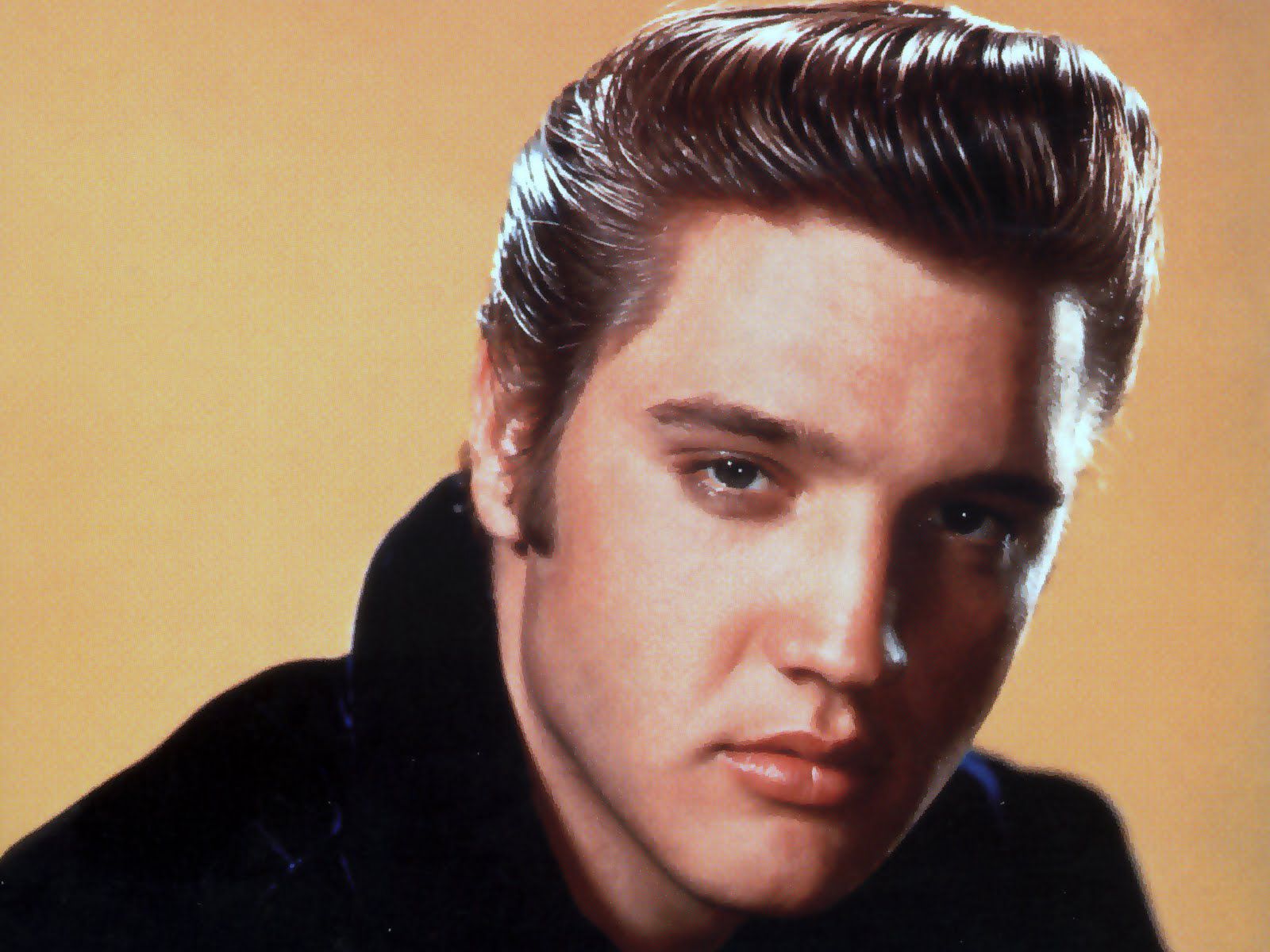
Elvis Presley is one of the most iconic music artists that has ever lived and has been entitled "King of Rock'n'Roll." Although specifically not a Pop artist, Elvis Presley had a unique style that was universal in the music world during the 50s. He, very much like his predecessors in this style of music generated huge popularity amongst the youthful female fan girls of the 1950s. One of Elvis Presley's most iconic tracks was Hound Dog;
This track sung by Elvis Presley generated world wide popularity when it was released in 1952. Elvis had young women screaming at him while he performed on stage. Elvis unlike Sinatra was able to be streamed live on Television which meant that a greater audience were exposed to his music. However, when Elvis was streamed on television, audiences were appalled based on the seductive and sensual body movements such as hip thrusting that the television companies were restricted to only showing the top half of his body while he was performing.
Elvis was seen in a film called "Blue Hawaii which boosted his popularity both within film and music;
Elvis never toured in the UK which meant that the only way to see or hear him was through the radio or at concerts in the US.
The Beatles
The Beatles were the most popular music act in the world during the 1960s. By 1966, they were sick of touring as there music could not be heard over the noise of all the screaming girls who had come to watch them in concert. The program "Top of the Pops" on BBC1 was the only way in which the Beatles fans could see their pop idols and music could be publicised from 1963 onwards.
1966
Despite giving touring a rest, in 1966 the Beatles released a double A sided single "Paperback writer" and "rain." They made two short films and sent them all over the world. These films were made in one day in the UK at a place called "Kenwood House."
Wednesday, 24 September 2014
Types of Music
Types of Music
There are two distinct types of music within the music industry, these two categories are separated into Organic and Synthetic groups. These two sides are different in the sense that one identifies with artists that have started out through the passion for music and have grown together as a group whereas on the other side there are artists that have been manufactured by producers, record labels and inspirational figures within the music industry and these artists are often useful money makers for powerful influential people and companies within the music industry.

Organic Music
Organic artists are the ones who are original and have worked their way from the bottom through a passion and drive for music. These artists whether a group or an individual are picked up by record labels who then attempt to sell the artist's type of music to the appropriate segment of consumers. Although image may be altered or tampered with eventually, at the preliminary stages of being signed, the artist sticks to their type of music and their fans and audiences enjoy the music that they produce.
Example of Organic bands are;
- The Beatles
- Ndubz

Synthetic Music
Synthetic artists are the ones who are created and processed by record labels to look and portray a certain image to different audiences. Where in this instance the record label is in the driving seat and is much to do with the success of a synthetic group, it is known that synthetic artists are commonly branded as money makers for big record labels. The main difference between organic and synthetic groups is the fact that organic groups rise up through the love and bond from their music whereas synthetic groups or artists are put together or created to appeal to a specific audience and portray a certain image in order to make money for the record labels.
Synthetic groups are often established when a gap in the market is identified and to exploit that gap, record labels bring together artists or create and individual artist with a certain image to fill that gap with the intentions of making a maximum amount of money. Good examples of synthetic artists are;
- One direction
- Little mix
- Rough copy


Organic Music
Organic artists are the ones who are original and have worked their way from the bottom through a passion and drive for music. These artists whether a group or an individual are picked up by record labels who then attempt to sell the artist's type of music to the appropriate segment of consumers. Although image may be altered or tampered with eventually, at the preliminary stages of being signed, the artist sticks to their type of music and their fans and audiences enjoy the music that they produce.
Example of Organic bands are;
- The Beatles
- Ndubz

Synthetic Music
Synthetic artists are the ones who are created and processed by record labels to look and portray a certain image to different audiences. Where in this instance the record label is in the driving seat and is much to do with the success of a synthetic group, it is known that synthetic artists are commonly branded as money makers for big record labels. The main difference between organic and synthetic groups is the fact that organic groups rise up through the love and bond from their music whereas synthetic groups or artists are put together or created to appeal to a specific audience and portray a certain image in order to make money for the record labels.
Synthetic groups are often established when a gap in the market is identified and to exploit that gap, record labels bring together artists or create and individual artist with a certain image to fill that gap with the intentions of making a maximum amount of money. Good examples of synthetic artists are;
- One direction
- Little mix
- Rough copy


Thursday, 18 September 2014
Record labels

The Music Industry can be defined by the four major record companies:
- Universal
- Sony Music
- Warner Brothers
- EMI
These four record labels are known as the "majors" based on their huge scale and financial position in comparison to other record labels in the industry. These record companies often have the most artists under their name and these artists are often the most well known and successful on a global scale. Furthermore, these record labels also have links with other industries such as film, television and electronics. Based on this, these record companies have the minerals to generate huge amounts of money through their business.
Universal
Universal is arguably the largest record label in the world, founded in 1934 by Jimmy Lovine, it has expanded to become globally known as an entertainment giant running both a film studio and a record label. This is an example of the conglomerates between the industries film and music under one big name that is Universal. Well known artists from this record label are;
- Bastille
- David Guetta
- Nicole Scherzinger
- Lady Gaga
Sony Music

Sony Music was founded in 1929 in New York City USA. With the current CEO being Doug Morris and battling Universal for the top spot, Sony has a line of films produced from their film company as well as their record label, this displaying their conglomerates with various industries. Furthermore, Sony designs various different digital products that are well known and used worldwide which increases the popularity and frequency of their name. Well known artists signed to Sony Music are;
- Alicia Keys
- Chris Brown
- Fatboy Slim
- Taylor Swift
- Alicia Keys
- Chris Brown
- Fatboy Slim
- Taylor Swift
Warner Brothers

Warner Brother records was founded on March 19th 1958 by Jack Warner, originally a Hollywood film studio who have produced various different films until present ever since it was founded. Warner Brothers have had a troublesome time over the years battling with both Universal and Sony in finding, signing, and producing world class artists, especially where they were established around 30 years after. Despite this, Warner Brother records have some world class artists signed to their name. Some of these artists consist of;
- Linkin Park
- Muse
- Red Hot Chilli Peppers
- Seal
EMI

Virgin EMI records was founded in 1972 by Richard Branson, Nik Powell, Simon Draper and Tom Newman in 1972. The company was later sold to Thorn EMI in 1992. The American operations of the company were merged with Capitol Records to create the Capitol Music group in 2007. In addition to this, the rights of the company became Universals to own with the purchase of EMI in 2012. At present, universal still own the record company and over this roller coaster ride of the development of the company, they have produced some class artists. These artists include;
- The Spice Girls
- Janet Jackson
- The Human League
- Roy Orbison
Industry Functions
These Major record labels mentioned above commonly own or license a series of smaller more subsidiary companies who may have artists of different or more unorthodox styles of music in order to reach out to different kinds of audiences and become more known as well as receive a greater financial gain. Through this, the top major record labels are always competing with each other to gain most profit and have the most well known name through ownership and licensing such as this.
Major Independents
Columbia
Columbia Records is an American flagship recording label, under the ownership of Sony Music Entertainment, operating under the Columbia Music Group. It was founded in 1888, evolving from an earlier enterprise, the American Graphophone Company—successor to the Volta Graphophone Company. Columbia is the oldest brand name in recorded sound, being the first record company to produce recorded records as opposed to blank cylinders. Columbia Records went on to release records by an array of notable singers, instrumentalists, and bands. From 1961 to 1990, its recordings were released outside the U.S. and Canada on the CBS Records label (for Columbia Broadcasting System, its parent from 1938 to 1988) before adopting the Columbia name in most of the world.
It is one of Sony Music's three flagship record labels with the others being Epic Records and RCA
records.

Island
Island Records is an American record label that operates as a division of Universal Music Group. It was founded by Chris Blackwell, Graeme Goodall, and Leslie Kong in Jamaica and has been based in the United Kingdom since 1962. Blackwell sold the label to PolyGram in 1989. Both Island, and another recent PolyGram acquisition, A&M, were at the time the largest independent record labels in history, with Island in particular having exerted a major influence on the progressive UK music scene in the early 1970s. The label operates as one of Universal Music's standalone labels since 2014, also handling Mercury Records.

Syco Music
Syco Music, also known as Syco Records, is a British record label founded by Simon Cowell in 2002. It is a subsidiary of Syco Entertainment.

Syco Music and its artists have been the targets of illegal hacking on several separate occasions. In 2009 ahead of the release of Leona Lewis's second album Echo, a number of unfinished demos and leftover songs from the project leaked online. An investigation was launched by the International Federation of the Phonographic Industry (IFPI), working with the record label and police to identify those responsible. Alexandra Burke was also targeted, having two demo-versions of songs from her debut album Overcome leak before the album's release. At the end of March 2010 it was reported that Syco had suffered once again from computer hackers who managed to obtain 14 of Burke's previously unheard studio recordings as well as 26 from Lewis.[
RCA records
RCA Records is an American flagship recording label of Sony Music Entertainment
RCA Records is the second-oldest recording company in US history. RCA's Canadian unit is Sony's oldest label in Canada, as it was only one of two Canadian record companies to survive the Great Depression. RCA currently houses Britney Spears, G.R.L., Whitney Houston, Jennifer Hudson, Hilary Duff, Foo Fighters, Pitbull, MAGIC!, Miguel, Chris Brown, Three Days Grace, Becky G, Alicia Keys, Tinashe, Kelly Clarkson, Kesha, Los, Justin Timberlake, A$AP Rocky, D'Angelo, Usher, Christina Aguilera, P!nk, Miley Cyrus, R.Kelly, Sia, "Weird Al" Yankovic, Pentatonix, and Shakira.
RCA Records is the second-oldest recording company in US history. RCA's Canadian unit is Sony's oldest label in Canada, as it was only one of two Canadian record companies to survive the Great Depression. RCA currently houses Britney Spears, G.R.L., Whitney Houston, Jennifer Hudson, Hilary Duff, Foo Fighters, Pitbull, MAGIC!, Miguel, Chris Brown, Three Days Grace, Becky G, Alicia Keys, Tinashe, Kelly Clarkson, Kesha, Los, Justin Timberlake, A$AP Rocky, D'Angelo, Usher, Christina Aguilera, P!nk, Miley Cyrus, R.Kelly, Sia, "Weird Al" Yankovic, Pentatonix, and Shakira.

Independents
There is a vast amount of independent music institutions that have little or no financial connections to the majors. These companies often have a small amount of acts that focus on specific angles within the music industry. Based on this, many artists under an independent record labels produce similar music to the other artists. This focuses on specific audiences and will help the record label reach their target audience and thus generate further interest in the company and gain a greater revenue for the business.
Monday, 15 September 2014
Foo Fighters Animatic and Evaluation
1) What we had to do
For this exercise, we were made to create an animatic storyboard which corresponds with the Foo Fighters - The pretender music video. We started by watching the music video a few times to get an idea of the shot types of the video, as well as getting a feel for the tempo of the song and how the editing matches this pace. We then began to craft our storyboards based on the different shots throughout the opening of the video. We created the storyboard to correlate with roughly 45 - 60 seconds of the music video. Once we had completed our storyboards, we then used digital cameras to capture each separate image on the storyboard in order and then import these images onto the computer. After we had done this, we then moved the images onto Adobe Premiere Pro and then began to edit the images in the order which fits together with the different shots of the video. We continued to do this until the sequence was complete. After we had completed this, we were able to export the video from Adobe onto Youtube where we could then embed the video from Youtube onto blogger.
2) What we learned by doing this
What I have learned from this exercise is how to use Adobe Premiere Pro to construct and edit a sequence which then becomes a video. I have learned that there are various different tools on the editing software that can make editing much more easier and enjoyable, and can also stylise the video which makes it look more appealing to the audience. Learning the new functions on Adobe Premiere has built my confidence where I feel I can use the program more efficiently and I believe this will help me when we further progress to begin the editing of our main music video for our coursework. I have also learned that the process of developing a storyboard for a music video varies a substantial amount to that of a thriller film with many more shots to accommodate on the boards with many different shot types.
3) How is editing a music video different from editing a thriller?
There is a big difference in editing a music video in comparison to a thriller film. First and most evidently, the length of each shot is drastically quicker than that of a thriller film. This means that there are many more shots to put together and the time each shot lasts is much shorter. This was tricky based on the fact that more focus is required to get an accurate cut of each shot in relation to the next one. This took time and effort where we had to be more careful when cutting each image on the storyboard and matching it to the shots in the video, as precision made the whole task overall much better than if the images were not in sync with the shots. In addition, while editing in the tone of a music video unlike a thriller film, it is key that the editing is linked to the tempo and beat of the music to keep the audience interested in both the video itself and the music.
Sunday, 14 September 2014
Potential tracks
There were a various number of potential tracks we could use for our music video, we had to scale down to only three tracks from around 5 and then was stuck with the dilemma of choosing which one out of the three remaining we preferred to use and what would best suit for a music video and help us meet the grade criteria to the highest degree possible.
These three tracks were;
- O not my day - It matters
- Excellent gentlemen - You gotta believe
- Bluey Robinson - Showgirl
After much speculation, we decided to use Excellent Gentlemen - You gotta believe, this is based on the fact that we found it difficult when refining the lyrics of O not my day - It matters. This was a very hard decision to make in the sense that "It matters" had a more desirable tempo then that of "You gotta believe" although the lip syncing would most likely be more easily done by using this track. In the end we decided to use this song for our music video.

These three tracks were;
- O not my day - It matters
- Excellent gentlemen - You gotta believe
- Bluey Robinson - Showgirl
After much speculation, we decided to use Excellent Gentlemen - You gotta believe, this is based on the fact that we found it difficult when refining the lyrics of O not my day - It matters. This was a very hard decision to make in the sense that "It matters" had a more desirable tempo then that of "You gotta believe" although the lip syncing would most likely be more easily done by using this track. In the end we decided to use this song for our music video.
Thursday, 11 September 2014
Looking for an artist
In order to make a successful music video for our coursework, there are specific things we need to take into account when choosing what soundtrack is appropriate to complete our music video.
Copyright


Copyright

As we are not allowed to use copyright music for our music video, it is imperative to use the music from artists that are not very well established or are unsigned to a label to avoid prosecution from record labels on behalf of the artist or removal of our work from online networks such as Youtube. With this in mind, we must be careful and logical of where to look for potential tracks to use and develop a music video for. Examples of illogical artists to use music off can be; Beyonce, One direction, and Taylor Swift. This is because it is unlikely that we would be able to contact these artists and gain permission to use their music and create a music video for it.
Where to find music


It is essential to preserve time and thus look for soundtracks in appropriate places. It is often found that on large scale online music hubs such as; Youtube, certain artists on Soundcloud and websites that represent well established artists in specific genres it is unlikely to find music appropriate for our music video. Therefore, it is practical to find tracks on websites that are not dominated by established and signed artists, where we will be more likely to assess practical tracks and view artists that are not well known or unsigned and its more likely to gain position to use their music. Practical websites that we can use to find music are;
- Soundcloud
- Reverb Nation
- Unsigned.com
Ideal Track

The ideal track to use in order to complete our music video has certain features that we must take into account when looking for music. It has been suggested that the length of an ideal track is between 3-5 minutes, this means that roughly our music video should exceed 3 minutes however not really venture further than 4 minutes. This allows the music video to be impacting and sharp where the soundtrack would not be drawn out and long-winded which can sustain the audiences attention. It is also important to have a good tempo to our music which can open the door to strong visuals to correlate with the tempo of the soundtrack in our music video and leave space for relevant and effective editing. However, it is also essential to not use a soundtrack that has adopted too much of a high tempo as we are assessed on lip syncing and a fast track with a lack of lyrics can result in a weak amount of lip syncing and can affect our grade.
Genres to avoid

To avoid unwanted complications, it is recommended that some specific genres of music are avoided to make the process of completing our music video easier and to meet the criteria we will be assessed on. There are a few genres that fall into this category for various different reasons ranging from location and the place we live in to technical aspects such as lip syncing ability and lack of flexibility when looking to make a video. The following genres are the ones that we are looking to avoid;
1. Rap - rap music is often very fast paced and may be challenging when lip syncing and editing a music video for the rap music genre. Furthermore, location ideas for rap music videos are often limited where it is normally a group of males rapping to the camera with subtle change of locations.
2. Country - The location in which we live is not very accommodating for the country genre where there is not much open grassland and it is quite Urban. Taking this into account and approaching our task from a practical perspective, we are going to avoid the country genre. Factors that relate to this can consist of things such as the fact that none of us have the ability to drive or own a car to get to these different locations.
2. Country - The location in which we live is not very accommodating for the country genre where there is not much open grassland and it is quite Urban. Taking this into account and approaching our task from a practical perspective, we are going to avoid the country genre. Factors that relate to this can consist of things such as the fact that none of us have the ability to drive or own a car to get to these different locations.
Sunday, 7 September 2014
Styles of the Music Video

There are various different styles of the music video, this can relate to the genre of the music, and what typical features we would expect to find in the music video. These different styles consist of;
- Narrative
- Cinematic
- Studio Based
- Intertextuality
- Parody
- Pastiche
Narrative
A video with a narrative often consists of the content of the video matching that of the lyrics of the song and there is a storyline in the video that makes it appealing to the audience. The artist who is singing the song can chose to feature in the music video as the character who is portraying the storyline and plot or they can choose to hire an actor to take up this spot. Narrative often conforms to the theory of Goodwin where the storyline illustrates the lyrics of the song and the two interlink. However, narrative styles of music videos can also be in disconjunction with the music video where there is a story that is not very relative to the song. A good example of a narrative style music video is J. Cole - She Knows;
Cinematic
Cinematic music videos take the shape of a small film and there is a strong sense of cinematography and film involved in the creation of these types of music videos. The use of the camera resembles that of a film and there are obvious conventions in these videos depending on what type of message the music is trying to convey. The camera angles and shots also conform to make the music video appear as a cinematic piece of media text rather than a simple high intensity edited music video with lots of different shots edited together rather quickly. Or in many cases, cinematic music videos often have a film as almost a prologue that leads into the main video.
Studio Based
Studio based music videos can accommodate many different genres such as rock, Pop, Jazz where there videos are all manipulated to suit the specific needs of the genre and artists. For example, a rock band may use a studio based music video where they are all sitting with their instruments by stands whereas a Pop artist may use a studio with a white backdrop with bright lights and choreographed performance with dancers. This is what makes studio music videos so versatile. A good example of a studio music video is Rihanna ft Drake - Take Care;
Intertextuality
Intertextuality is another style that can be found in the content of a music video where the video makes reference to different media text from the past which the audience understand and can relate to. These references expand across all of the media and can take features from classic music videos or major films that are known world wide by many people and are highly recognised and significant. This is effective because it gives the audience a chance to identify with other media texts and thus makes the music video that is displaying these intertextual references memorable and interesting.
Parody
A music video can also come in the form of a Parody which means that it makes fun of certain characteristics of genres, artists or writers. An example of a parody could be an artist of present day performing as if Michael Jackson in a music video back in the day. A parody is very similar to intertextuality but it links more specifically to genre or characteristics of a particular artist. These videos are effective as alike intertextual media, they link together two pieces of media and help sell the music as they are made fun and memorable.
Friday, 5 September 2014
Purpose of the Music Promo Video
There a different purposes to the creation of a music promotional video to aid an audio track for audiences to view worldwide. The two main reasons identified are as follows;
- Promotion
- Publicity
- Making of Money
- Increase sales
All of these contributing factors together combine to make a successful campaign for a music soundtrack in relation to both popularity and knowledge of the song as well as maximum revenue.
Definitions:
Promotion - The promotion of a music video is instrumental to get the music known and identified by the people both within and outside the music industry. Production teams and artists can promote their video through methods such as radio interviews, music conferences and through social media networking. This is evidence of the relationship shared between different types of media such as Radio and New Media.
Publicity - This refers to having the video portrayed and known specifically within the public. Publicity mostly occurs in relation to print media and Television. Music magazines often have aspects such as reviews of new released music videos and gives the consumer ideas about new music soon to be on the market. Also, programmes such as MTV and entertainment news programmes such as E-news are a huge way to publicise new music videos to get them known to the public with shows such as the Top Charts to monitor what the hottest tracks at the present time are. This again shows the relationship between the music video and different media sources such as Print Media and Television.
Increase Sales - Both of the above are key to how much the sales of a music video are increased by as they determine how known the track is within consumer audiences and how successful the track is overall. Although ultimately, much is determined on the quality of the music to make audiences eager to buy it, a successful music video accompanied by a strong promotional and publicity campaign can increase sales to a recognised position where it makes as much revenue as possible and there is a greater profit gained for the music production company.
Synergy:
The interaction between different media industries is called synergy, where the combination of the two industries overlapping can reach a product out to a greater variety of audiences making it more likely to gain an overall interest in the music, music video and a larger profit altogether, as well as gain interest in the product from the other industry e.g. film.
As mentioned above, there are many types of synergy within the media industry. Music is often coupled together with TV, radio and print media to gain as much publicity and knowledge as possible. However, a major type of synergy can be found within the relationship between Music and film. It is often found that clips of a film are found within a music video of a soundtrack and the content of the song relates to that of the film. Furthermore, the film then adopts the song as its main soundtrack and the song can feature throughout the film or as part of the end credits.
Examples:
Wet Wet Wet "Love is all around" / Four weddings and a Funeral
This is a great example of synergy between the music video and film. It is clear that throughout the video there are clips of the film "four weddings and a funeral" shown on screens within the screen that the audience see. This is effective as the tone and content of the song relate to that of the clips in the film and therefore the audience receive a greater sense of emotion from the music video altogether with the coming together of both the film and the music video. This is an effective example of synergy based on the fact that this will help both to promote the music of the song as well as the film.
A Thousand Years - Twilight Saga Breaking Dawn Part 1
Christina Perri - A Thousand Years and Twilight Saga Breaking Dawn part 1 is another great example of synergy within a music video where Christina is present singing the lyrics of the song in various different locations that have quite a tranquil, free and relaxed environment which correspond with the tone and pace of the song and furthermore are in cohesion with the clips shown from the film. This works very effectively as the music video helps capture the audience in regards to both the song and the film which gains an interest in both sources of media.
Elton John - The Circle of Life - The Lion King
Yet another great example of synergy within a music video is The Circle of Life by Elton John where there is a main shot of Elton singing at a piano top which is supported by a furry pretend Lion which relates to the film, the Lion King. As the video continues, there are clips from the actual animated film the Lion King which massively helps increase the popularity of the film as the lyrics of the song are extremely relevant to that of the film. This yet again helps to massively boost the popularity of both the song and the film which makes the music video relevant to a wider audience.
- Promotion
- Publicity
- Making of Money
- Increase sales
All of these contributing factors together combine to make a successful campaign for a music soundtrack in relation to both popularity and knowledge of the song as well as maximum revenue.
Definitions:
Promotion - The promotion of a music video is instrumental to get the music known and identified by the people both within and outside the music industry. Production teams and artists can promote their video through methods such as radio interviews, music conferences and through social media networking. This is evidence of the relationship shared between different types of media such as Radio and New Media.
Publicity - This refers to having the video portrayed and known specifically within the public. Publicity mostly occurs in relation to print media and Television. Music magazines often have aspects such as reviews of new released music videos and gives the consumer ideas about new music soon to be on the market. Also, programmes such as MTV and entertainment news programmes such as E-news are a huge way to publicise new music videos to get them known to the public with shows such as the Top Charts to monitor what the hottest tracks at the present time are. This again shows the relationship between the music video and different media sources such as Print Media and Television.
Increase Sales - Both of the above are key to how much the sales of a music video are increased by as they determine how known the track is within consumer audiences and how successful the track is overall. Although ultimately, much is determined on the quality of the music to make audiences eager to buy it, a successful music video accompanied by a strong promotional and publicity campaign can increase sales to a recognised position where it makes as much revenue as possible and there is a greater profit gained for the music production company.
Synergy:
The interaction between different media industries is called synergy, where the combination of the two industries overlapping can reach a product out to a greater variety of audiences making it more likely to gain an overall interest in the music, music video and a larger profit altogether, as well as gain interest in the product from the other industry e.g. film.
As mentioned above, there are many types of synergy within the media industry. Music is often coupled together with TV, radio and print media to gain as much publicity and knowledge as possible. However, a major type of synergy can be found within the relationship between Music and film. It is often found that clips of a film are found within a music video of a soundtrack and the content of the song relates to that of the film. Furthermore, the film then adopts the song as its main soundtrack and the song can feature throughout the film or as part of the end credits.
Examples:
Wet Wet Wet "Love is all around" / Four weddings and a Funeral
This is a great example of synergy between the music video and film. It is clear that throughout the video there are clips of the film "four weddings and a funeral" shown on screens within the screen that the audience see. This is effective as the tone and content of the song relate to that of the clips in the film and therefore the audience receive a greater sense of emotion from the music video altogether with the coming together of both the film and the music video. This is an effective example of synergy based on the fact that this will help both to promote the music of the song as well as the film.
A Thousand Years - Twilight Saga Breaking Dawn Part 1
Christina Perri - A Thousand Years and Twilight Saga Breaking Dawn part 1 is another great example of synergy within a music video where Christina is present singing the lyrics of the song in various different locations that have quite a tranquil, free and relaxed environment which correspond with the tone and pace of the song and furthermore are in cohesion with the clips shown from the film. This works very effectively as the music video helps capture the audience in regards to both the song and the film which gains an interest in both sources of media.
Elton John - The Circle of Life - The Lion King
Yet another great example of synergy within a music video is The Circle of Life by Elton John where there is a main shot of Elton singing at a piano top which is supported by a furry pretend Lion which relates to the film, the Lion King. As the video continues, there are clips from the actual animated film the Lion King which massively helps increase the popularity of the film as the lyrics of the song are extremely relevant to that of the film. This yet again helps to massively boost the popularity of both the song and the film which makes the music video relevant to a wider audience.
Thursday, 4 September 2014
Brief
"A2 Music Video - Our task is to produce a music 'promo' video up to 5 minutes. Either working on your own or in a group of up to four members. You also need to produce a 'digipak' for its release on DVD."
This is what we have been briefed with for this task and section of coursework for this part of A2 media studies.
Your task is to produce:
¡ A music ‘promo’ video
¡ Up to 5 minutes
¡ Either working on your own or in a group of up to four members
You also need to produce:
¡ A ‘digipak’ (Six panels) for its release on CD
¡ A magazine advertisement for the digipak
In addition to your ‘promo’ video you will have to produce:
¡ A critical evaluation
Tuesday, 2 September 2014
Welcome Post

Hello, my name is Michael Rhodes and this is my A2 media blog based on the topic of the Music Video. I enjoy varied genres of music and I am looking forward to completing my own Music video to a soundtrack as part of the course criteria. I just wanted to take this opportunity to welcome you to my blog and I hope you will enjoy exploring my blog and what I have constructed while taking part in A2 media studies.
Kind Regards,
Michael
Subscribe to:
Posts (Atom)