On the first day of filming our music video, we went to the iconic land of Winterville at Victoria park in Mile End where we captured the footage of myself and a fellow peer acting like two people in love in a romantic and stereotypical place for couples to go to. Based on the concept of our chosen soundtrack, we then made the decision to have alternative shots of me in the same places and doing the same things in the venue but without Stacey my peer to imply that we are not together anymore. To finalise this we then took some anonymous shots of other 'real life' couples present at the attraction, and then companioned this with an eye line match of me looking on at the couples in a deflated manor. Hopefully, when we come to editing this segment of our music video, it will be evident to our audience that we have gone through a break up and they understand the message we are attempting to convey.
These are pictured examples of me and Stacey at Winterville where we are together in the same place and then a transition using a fade effect to me alone in the exact same place looking sad and deflated. We believed this to be an obvious and effectively simplistic in conveying the meaning of our video to our audience.
These are some of the mesmerising attractions at Winterville that really inspired us to do some filming at the venue. It is unique and relevant to our music video and different from our other settings which I believe will enhance the quality of our final piece of coursework.
The footage that we recorded at Winterville was used in our final coursework piece and was image of the happiness and then the conflict between my character and my peer Stacey and then showing how I am left lonely towards the end of the track. This filming date was successful as when we came to editing our music video we found that we had captured enough footage to use in the dimensions of our work.
Digipaks typically consist of a gatefold (book-style) paperboard or card-stock outer binding with one or more plastic trays capable of holding a CD or DVD attached to the inside. It means the CD comes in a cardboard flip out case rather than a standard plastic hinged case.
Digipak style casing is often used for CD singles or special editions of CD albums and the tall DVD digipak is used as a premium package for DVDs and DVD sets. On a digipak, you can expect to find;
- Six panels
- Spine
- Barcode
- Track list
- Disk impression
- Membership postcard/flyer
There is also a section where you can find band information or a free flyer or poster that comes in the Digipak.
There are also imperative features that should be included in relation to the information features of a digipak. These regularly include;
-Name of the Artist and Album - it is important to remember that in order to make the information on the digipak appealing to the audience you must consider various factors such as; font, size of the writing, colour and position in relation to the dimensions of the digipak.
- Images - You must consider the size, layout and content of the images you use.
- Colours and themes - this can help the digipak look appealing to consumers and peak their interest in order to aid their desire to purchase the Album.
Analysis
The album by Michael Jackson - 'Dangerous' has a very dynamic and complex front cover. When the audience first perceive the album cover, there is so much to take in that it is almost overwhelming and this effect really engages the audience and grabs their attention. The relationship and interaction between the different colours is effective as they blend together well and do not clash which makes the overall look of the album cover effective and inviting. The audience would identify instantaneously with Michael Jackson's eyes as eye contact is the main factor that connects people together. The fact that we are only witness to his eyes also relates well to the title of the album being dangerous as his eyes create a sense of mystery and mystery and danger quite often link together. This is a tool to invite the audience into the mystery of the album especially as the title of the album is located on top of a gate suggesting the audience should venture into the gate and identify with the content of the album. The animosity created by the different elements of the overall cover provides the consumer and audience with enigmas to answer for themselves. The album cover is very abstract and unique with very different features ranging from throned dogs and birds and many of these different features are juxtaposed to each other and the entire album cover cultivates the idea of randomness and confusion. This can interlink with many problems and accusations that Michael Jackson was facing in the media at that specific time. Overall the album cover is very individual and effective as it intrigues the attention of the audience and develops their curiosity, making them more keen to purchase the album and find out how the music is in comparison to the look of the album cover.
Bastille "Bad Blood" is another album that has a rather unique setting and interesting style. It places emphasis on their lead singer who is highlighted by a light in the centre of the road. The viewer gets the sense that it is an open country road and the dark surroundings of the road entreat a certain danger that the audience register with the rather darkened nature of the cover. This supports the title as there could be something that relates to "Bad Blood" waiting in these unseen areas. The oddity of a man in the middle of a country road suggests that he is in trouble and is running away from something that is following him. There is most definately an intimacy and relationship between the light and the darkened surroundings of the road and is almost suggestive of the idea that bastille is leading the way and is producing the light that surrounds him. Overall, the album cover is intruging and although not as outstanding as Michael Jackson's and other iconic artists, it relates well to the title of the album and invites the audience to watch.
Katy Perry
Hot and Cold
This album cover from Katy Perry is relatively basic and has both Denotations and connotations. There are connotations that relate to Katy Perry's personal life within the media possibly where she places one hand on her ear and in the other she has a banana held up to her other ear suggesting she is blocking out the media and listening to an inanimate object. The fact that what she is holding is a banana is phallic and suggests that one of her issues within the media are being accused of sexually depicting herself and allowing herself to be sexually objectified by the media. Katy is showing herself to be almost rebellious through this picture and is not worried or focused on the negative portrayal of herself. The large font used for her title hot and cold is impacting and the connotation of the title suggests that everyone has their ups and downs and this should not affect what people think of Katy.
This is another KP album cover and is different and contrasted to her previous one. The use of computer technology is more relevant and involved within the picture and Katy is sexualised to some extent through this image. The intimacy between the cloud and stars coupled with the purple backdrop of the image is inviting and easy on the eye and causes the audience to be instantaneously intruged and interested in what the album is to be about. The text on the album cover has resigned and is smaller with a less bolder font and is located right at the bottom and right at the top of the album cover. This places less emphasisi on the text and focuses the audiences attention on Katy Perry. Katy appears to be enimating light from her person and the relationship between her purple dress and the purple backdrop allows the album cover to blend and not clash making it unappealing for the audience to watch. Katy is sexualised where she can be seen in a short dress exposing much of the flesh on her legs and her up body. She has one hand firmly planted on her breast and the other on the side of her face in a sexual manner, this is sexual and inviting for a male audience. Furthermore, this conforms to the theory of Mulvey where she developed the theory of the male gaze and the sexual objectification of women. Overall, the album cover is effective and intriguing as the audience are forced to identify with all the outstanding features of the image.
Rockin Robin is a great example of the simplicity of Pop music videos in the 1970's and is a good starting point to assess how Michael Jackson's videos have progressed and developed in technology as more digital technology has emerged and evolved to aid the complexity and dynamic of music videos. There are many features of Goodwin's theory of the music video as the band is notoriously known as the Jackson 5. They are performing on stage in a studio we assume to the audience which corresponds to with Goodwin's idea that Pop music videos involving group artists are often seen performing a dance routine or on stage to the audience. The video is very basic and shows how when Pop music was just beginning to emerge as a major type of music, the music video that would help promote it was simplistic and easy in nature.
Rock with You - 1979
There is a distinct difference between 'Rockin Robin' and 'Rock with You' over the course of 9 years. The lighting is exotic and impacting on the audience in this video which is accompanied by the stylised and outstanding outfit of Michael Jackson. This shows the slight development of digital technology and style of the music video over the period of the 70s where lighting is used more effectively. This video also conforms to Goodwin's theory of the Pop music video where Michael Jackson is performing to a digital audience in relation the camera.
Billie Jean - 1982
Billie Jean was the first pronounced music video where there was a storyline that accompanied the music of the track. It also shows developments in technology in comparison to his previous videos. The use of the lighting up of everything Michael touches is not only illustration of developments in technology but presents the story that Michael is innocent and not liable for impregnating "Billie Jean" and the lighting up of everything that he touches illustrates his innocence. This illustration within the music video means that this video again conforms to the theory of Goodwin where music videos can illustrate the lyrics of the song and show the meaning behind the lyrics.
Beat It
Beat it is another iconic Michael Jackson video that employs choreography and performance within the video while telling a story at the same time. This shows that the lyrics are relating to the action on screen and therefore conforms to Goodwin's theory of illustration and performance within the music video specifically in the Pop genre. The video also gives a message to the audience that violence isn't the answer and the violent nature of the two gangs is juxtaposed to the choreography towards the end of the video which suggests dance should replace fighting. Michael Jackson appears the peace maker and the men begin to follow him in dancing which again exults Goodwin's idea of the record label presenting and conveying their artists in specific ways. This was one of first videos that had major choreography in it and is a milestone and reference point for future Pop music videos.
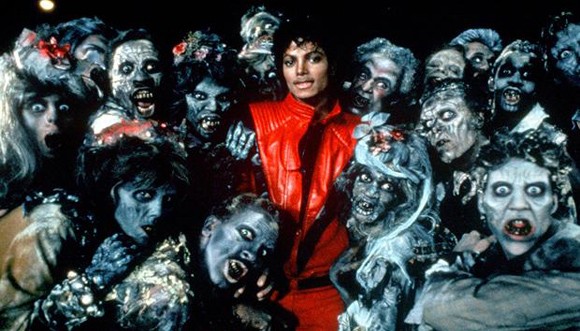
Thriller
Thriller is considered the most famous music video of all time and the first to adopt the storyline style to the music video. In 2009, it was added by the Library of Congress to the National Film Registry which makes it the first video in their registry.
Cultural Milestone
The video is undoubtedly a cultural milestone in the history of music videos with the correlation of choreography in music videos, exotic costume and dialogue and extended movie style music video that is edited down to allow the video to be screened on TV. Noticing the longevity of the music video, MTV created a short version of the music video which ran a little under 5 minutes to accommodate the fast flowing nature of music television. Despite this, the main 13 minute long video racked in 100 million views on YouTube when it came out.
The video cost $500,000 to make and Jackson's record label had no intention of paying for it since the album was on the downswing and they had already financed two videos for his album. Michael was adamant that he wanted to turn into a monster and agreed to pay for it himself in order to make it happen. Jackson's director, John Landis took on the project as he saw it as a way to revive the short film genre which he loved.
Jackson did not have to pay for the video because he landed big deals with Showtime TV and MTV who paid for the video and in return be the first to air the video and a behind the scenes documentary of the "Making of Thriller." MTV deemed it unacceptable that Showtime were to broadcast the video before them and so Pittman decided that he was going to pay out £250,000 to broadcast the video after the window was up. MTV were not used to paying for videos so they said they were paying for the documentary film when really they were paying for the music video itself.
1984
At the first MTV music video awards in 1984, Michael Jackson Thriller won;
- Best Performance Video
- Best Choreography
- Viewers Choice
The music video majorly started off a trend seen in music videos to follow with group choreography prominent in Pop music videos from thriller onwards. The video also owes a debt to Alice Cooper who created a music video in 1975 based on Welcome To My Nightmare tour which was written was Vincent Price. Cooper's production was based on a full album but had the theme of a horror and thus she felt she needed compensation from the video.
From 1983 people were able to watch VHS recordings at home people were able to watch Thriller at home which included the 13 minute video and the behind the scenes making of Thriller. This music video became the greatest selling music video of all time and was later certified by the guiness book of world record as the best selling music video of all time pulling in 9 million units. This was majorly assisted by the time the video was released being just weeks before christmas.
The style of the music video being both a short film and a music video means that there is so much involved in the production. The use of the camera interlinks traditional cinematography with music video stylised editing. The short film is of a horror genre which correlates with the music and meaning of the track, this therefore means that the Thriller video conforms to the theories of Goodwin where the music video is illustrative and tells the story of the song. The choreographed routine performed is a trade mark in pop music and is classic. The mise en scene is used very effectively by the director where the costume is very disturbing and intimidating which meets the intentions of the vidfeo where they want to make the audience feel uncomfortable and freightened. Overall, the music video is very iconic and has great impact on the audience and incorporates a range of features that make up a classic pop music video.
Bad
Bad is another iconic music video of Michael Jackson which was the first after the major track of Thriller. The audience was excited to see Michael's new image as they had seen within the media that he had changed his image. By now, Michael was the biggest Pop star in the world and this video was first aired on the BBC.
The music video adopts a performance based persona and Michael can again be seen wearing a fashionable and unique outfit which helps exult his image as a Pop star. The music video is also very illustrative where they are dancing within a car park which is notoriously recognised as being a place where dodgy undertakings happen and people cause trouble in locations like this. This corresponds with the idea that Michael Jackson is 'Bad' and him and his dancers are being troublesome. As well as this, another Goodwin theory that is met by the video is that fact that there is choreography which Goodwin said is typical of a Pop music video.
The Way You Make Feel
In deconstructing this music video, it is obvious that there are features of Laura Mulvey's theories in relation to how the media represents women and perspectives of society. The woman is immediately presented as an object of erotic desire using camerawork that portrayed the sex appeal of the actress such as low level shots of her legs while she is in a pencil skirt which will appease a male spectator where they perceive the woman as something of erotic desire. The objectifying of woman is companioned by the fact that Michael Jackson is showing off to his friends in pursuit of the actress and the men outnumber the woman and make her the main source of sexual desire. In addition, Michael Jackson uses many phallic and sexual movements within his dance moves such as hip thrusting in the direction of the female actress. This corroborates the theories of Laura Mulvey and makes the audience regardless of gender identify with the perspective of the male, hence, the male gaze. Furthermore, Michael Jackson is active and has agency whereas the female is passive and does not have a protagonist purpose within the text. This relates to other theories such as patriarchy and portrays ideas within the media about society that it is male dominated and they make the rules and thus develop the perspective towards women.
Black or White
Black and White is an extremely powerful and inspirational music video made by Michael Jackson which relates to problems faced by Michael within the media and in his personal life. Despite this, it also relates to wider problems within society and gives a message to unite and bring peace between all different types of people. The video is a cultivation of diversity and the mise en scene shows Michael in multiple locations with different cultures and people promoting the notion that it doesn't matter who you are and for everyone to get along. The camera work is effective and the special effects are developed in comparison to previous videos. There are many close up shots in companionship with long shots to engage the audience and keep them riveted by the video. The small story at the beginning brings the comedic element to the song which is useful and compliments the rather serious message of the video and is also evidence of how special effects have developed from his first videos in the 70s to digital technology in 2000s. The reference to Peter Gabriel's "Sledgehammer" at the end of the video is very effective and finalises the message of the video and song. This shows how the video relates to that of Goodwin's theory where the song is illustrated by the action on screen. It also shows the unique use of camera work utilised by Michael's director and filming crew.
Earth Song
This is arguably Michael Jackson's most powerful music video out of all of them. The song and video touches on real life problems and serious topics regarding the world and lives. Real life sequences are placed throughout the video to emphasise what the message is in relation to real life. The video is also a clear example of the development in digital and CGI technology where the powerful sequences and pictures are shown such as dead animals, trees and people living in poverty. This gets the audience to think about what they are seeing on screen and receive the idea that there are problems and things might need change. This shows that the music video is illustrative and thus conforms to the theory of Goodwin in relation to music videos. It also shows contrast between Jackson's previous work where there is more substance and meaning behind his music and videos in comparison to pure performance based videos. Jackson has also been accused by critics of appearing as a Christ like figure. This is based on the fact that Michael seems to heal the surroundings which are damaged and in turmoil and the way he held himself within the trees depicts the image of crucifixion.
Scream
Michael Jackson Scream is the most expensive Michael Jackson video. It cost a whopping $7,000,000 dollars to make and today it would cost $10,834,000 to make. This an extremely high budget of a music video and helps finalise why Michael Jackson was called thking of Pop. This clearly shows the leap in technology from Michael's first video in the 1970s to this video. The mise en scene allows the video to adopt a futuristic vibe with lots of digitalised and stylistic features such as spaceships and the capture of illusion where Michael is walking on the ceiling for a period of time. An example of an iconic effect used is when it appears that Michael is in a room with no gravity and is suspended in the air.
My research
Leave me alone
This is a very interesting and dynamic video of Michael Jackson which is a good example of an amplified music video in relation to Goodwin's theories. Michael Jackson addresses issues surrounding him within the media and the video uses clever techniques to identify these. Another Goodwin theory is met where there are many instances throughout the video where there are screens within screens and Michael's face shows up on things such as Newspapers. The animated nature of the music video is efficient as it allows topics and issues Michael is confronting to be translated into effective imagery which again conforms to Goodwin's theories of repeatability and reoccurring images used to convey a certain message. This video shows the power a music video can have in the media and what messages it can send to the audience.
Sexism is a major issue within the media industry and can be seen within the content of music videos. This is sexism in the form where female artists are objectified in the video as a tool of sexual desire without much agency but something to placate a male audience. While watching the videos, women are forced to identify from the perspective of males and what they wish to perceive. This supplements Laura Mulvey's argument of the Male gaze where the audience must view the media text from the perspective of males with the female constructed as an object of sexual desire and lust.
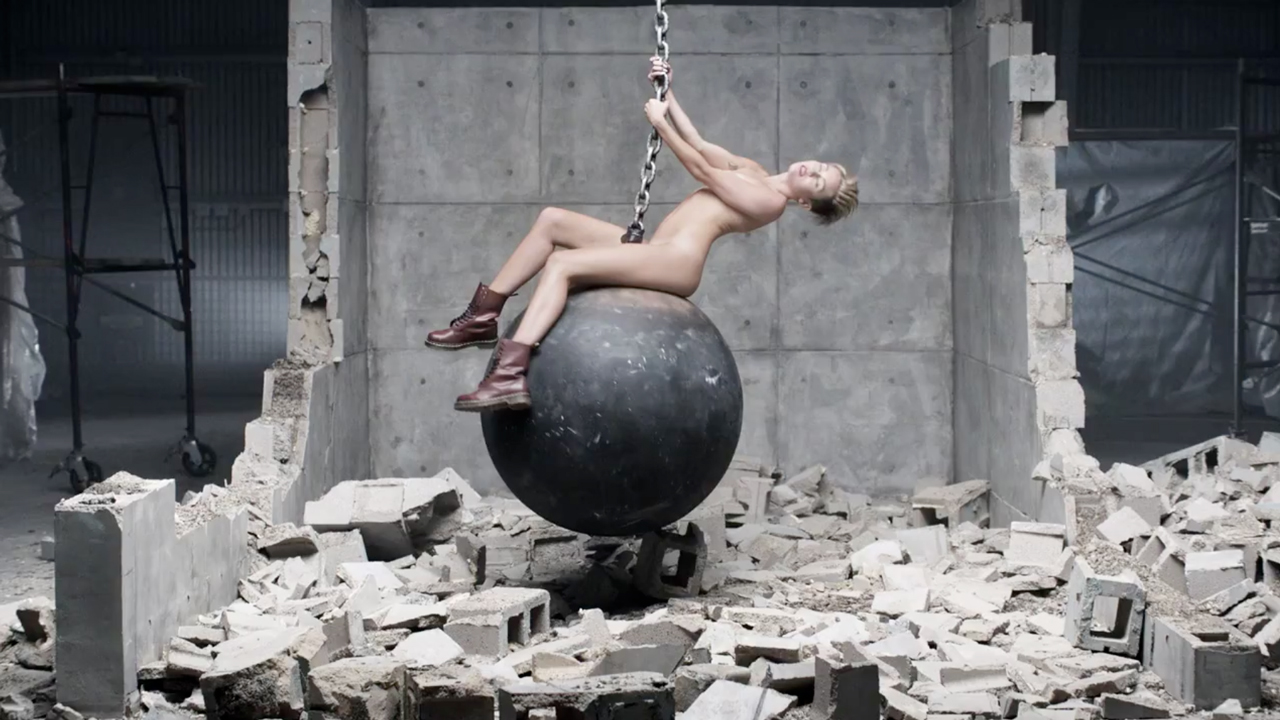
Miley Cyrus - Wrecking Ball
This is an iconic example of sexism in a music video and the media industry. First and foremost, the actual song lyrics and the message conveyed could be interpreted as representation of a patriarchal society where she is exulting male dominance in relationships in the sense that she is at the mercy of the male she is singing about suggesting that he had the power in the relationship and then when she challenged this power, he walked away leaving her in bits.
Furthermore, the video is extremely sexualised and conforms to Mulvey's theory of the male gaze, the very basic studio setting of the video and the often white and grey background forces the audience to view the video firmly focused on Miley swinging on the huge wrecking ball. The high level of nudity and the fact that Miley is often centred in the middle of the camera suggests that the creator of the video wanted to emphasise the erotic sensations resonated from Miley and her relationship with the camera and audience.
Contrast
There is a big contrast to Miley Cyruses' image as Hannah Montana in comparison to her new image within the music industry. It is suggestive of the idea that the music industry 'prostituted' Miley and created her this image to show her transition from a young and innocent girl to a woman. However, this as been a carried out in an extremely sexual and objectifying way and other ways could have been used to make Miley look more like a woman without having to be outrageously sexual. This suggests that the media sexualises women and females are supposed to adsopt a sexual and erotic personna in order to be successful within the industry. Consequently, these women come under scrutiny by critics based on the sexual exposure within their music videos. This would conform to theories such as that of Laura Mulvey further and this sexual depiction of women is in correlation to the fact that there only 16% of females are media practitioners which suggests that these sexual depictions are heavily determined by male directors which would support the idea that the media industry is sexist and male dominated.
Robin Thick - Blurred Lines
Robin Thick - Blurred lines is an outrageous example of sexism in the media. The fully clothed men are paraded around by completely nude women who are holding themselves in a very sexual and provocative way. This video more than any other music videos related to sexism speaks for itself. It is outrageously sexist and completely and wholesomely objectifies women. This music video conforms thoroughly with the theories of Laura Mulvey who developed the Male Gaze where the camera sexualises the woman and the audience are forced to identify with the perception of the Male while watching the media text which relates to the theory. Also, the camera watches the male antagonist admiring the sexualised woman who normally does not have agency within the media text watched on screen.
The use of various different shots ranging from long shots to close up shots of the women are effective in correlation to the simplistic studio setting of the video where the emphasise is drawn upon the nudity of the women. The way these three different factors interact with each other throughout the video forces the audience to identify with the sexualised women and view this from the male perspective further giving emphasis to how Laura Mulvey's theory of the male gaze and patriarchy within the media.
Lilly Allen - Hard Out Here
Lilly Allen's video Hard out here is a very controversial video that addresses problems in the medium and especially inequality and sexism within music. The video is a paradox where Lilly Allen is sending a message to the audience showing how things need to change as there are female supporting dancers being extremely sexually provocative with their dance moves which is a depiction of the common day pop or R&B video and addresses these stereotypes. Although the song conforms to the theories of Laura Mulvey in the sense that it is identifying what is wrong with the depiction of women in the media the video is very different and subverts from this theory and women are being sexualised through their outfits and dance moves. Despite this, the video is unique in the sense that the overall message is that what the girls are doing in the video is not necessarily wrong, but it is a constant thing where women are being sexualised in the media and are being depicted as objects of erotic desire.
There are a variety of camera angles used by Lilly Allen's director to again put emphasis on the sexualised nature of the video and the dance movements of the females within the video. There are many close ups on the backsides of the dancers as they move them in a sexualised way. This cultivates feelings of erotic desire for the male audience and the female audience are forced to identify with this and may feel degraded by these shot techniques in the portrayal of women.
Laura Mulvey - Male Gaze
The stem of this theory is that the depiction of women through the camera in media text is from the male perspective and the audience is forced to identify with this perspective which means that they are forced to view women as objects of erotic desire. Furthermore, if the audience do not directly view women as objects of erotic desire then they are identifying with the perspective of the male protagonist who views the female as an object of erotic desire. A good example of this is transformers where Shea Lubuf views Megan Fox as an object of erotic desire for the women to view;
Despite the depiction of women, their presence in media text is essential. They do not normally have much agency in the media text or film but their importance stems from how they make the male character act or feel which helps develop the plot.
Male Gaze and Hegemony
Hegemony is societies perception of the dominant groups in a social or political context. It shows the dominance that subordinate groups obtain over insurbordinate groups. Examples of Hegemony is the upper and middle class dominance over the working class. This relates to sexism in the media and Mulvey's theory of the male gaze based on the fact that it suggests within media texts, the male dominance is shown over the female characters. This results in women objectifying other women Mulvey argues, and this then puts pressure on society even more where women are always sexualised within the media and because there is so much media around for people to view, women feel that they need to look and feel a certain way to accpeted by society.
Visual pleasure and Socophilia
Characters that look at other characters within the media text are active and the characters which are being viewed are often female and less important. It is often suggested that women slow down the narrative and act as inspiration for the male protagonist to act. Men on the other hand move the narrative forward and make things happen which gets them viewed as active.
Socophilia translates into 'the love of watching' and relates keenly to objectifying within the media. Movie and film have often been related to Socophilia practices and the idea that women are objectified within the media. The term derives from Freud's study of the psyche and is a key term in referring to the media.
Patriarchy
A patriarchal media representation is another theory designed by Mulvey which relates to the idea of a dominated society by males where they set the majority of the rules and construct and represent the ideal visions, roles and male dominance over women. The worry about this concept is the fact that if it sustains then the socophillic audience will harbour these ideas and it will turn into reality in society if it has not already.
Anaconda - Nikki Minaj and the significance of Black women in the sexualised media
Nikki Minaj's Anaconda video is a highly sexualised video and it can be keenly argued that it is sexist ranging from the song through to the content of the music video. Starting with the mise en scene, Nikki and her supporting dancers are highly sexualised and objectified making them stimulating to watch as objects of erotic desire and as Mulvey would argue, de-humanising the women. There is also a high amount of Phallic symbols where we witness banana's rotating on the record player and also Nikki Minaj eating a banana herself. There are short and fast paced camera shots and dynamic angles to contribute to the seductiveness of the video and encapsulates the idea of sexual chaos. To further support this, the video has an illustrative persona where the lyrics of the song relate strongly to the visual aspects of the music video and are suggestive of sexism and sexual objectification of women to an even greater extent then that of the actual video.
To further assess the idea of sexism within the music video, nearly all of the dancers that are being perceived as erotic are black. This is suggestive of the idea that, especially within music videos, black women are more regularly sexually objectified than women of other ethnicities. A significant contributing factor to this is the fact that the rap music is very derogatory towards women often using terminology such "bitch" and "Hoe" to describe them which is companioned by women, mostly black women, being sexualised in rap music videos and objects of erotic desire to prance around the male rappers.
Alex Southam is another freelance music video director who has directed many music videos that are in mainstream music, Southam has worked for Agile music who have written a review of the director declaring that Alex is a;
"Exciting new talent who is working in a dizzying variety of styles across live action and animation. Entirely self taught, his inventiveness and creativity have caught the eye with a series of diverse promos for the likes of Walkmen, Alt + J and Lianne La Havas. Alex joined Agile in 2012"
When starting out as a director, Southam had to undertake all the tasks that were involved in the creation of a music video production or a commercial. This included;
- The Camera
- Lighting
- Editing
This was very exhausting for Southam as all of these tasks would be very time consuming and excessive for one to perform by themselves. As Southam began to show promising skills as a director, he earned the privilege of a director of photography and a team to help with the process of creating a music video.
Style
Alex Southam admits that he enjoys the creative freedom that is given to him through music videos in comparison to commercials as his artistic visions are able to be fulfilled and there is much more potential whereas commercials most commonly force directors to follow strict guidelines and restricts what can be done through skilful camera work. Shots are rather generic and dull whereas there is a real potential to explore different avenues with music videos and what potential they have.
He uses "Vimeo" to showcase his productions as this is becoming an important platform in the media and especially for music videos. It is also argued that this platform has a higher status and potential than YouTube.
Breakthrough
Alex Southam's breakthrough came from his production of Tessellate for Alt + J with a small budget of only £10,000. The video was completed in one day and had a rather large cast. Alex used after effects for the special effects used in the video.
It goes without saying that this video from Southam is a very unusual and authentic video with abstract features and a unique use of the camera. With one main setting and a large cast located in the same places throughout. Southam uses the camera to specify a particular character or set of characters in the video in order to try and extract meaning from their interactions. Through the use of close ups juxtaposed to long shots and the meaning of "Tessellate" being the piecing together of mosaics without gaps; it makes it evident to why the video is located in a large cathedral and place of worship where there is many mosaics that are Tessellated. This further supports the theory of Goodwin where the lyrics of the song relate well to the features of the video. This has relevance as it suggests that the close up shots and the long shots are attempting to portray the idea of piecing the lives and the interactions of the different people together. Overall, the video is very unique and clever and gives Southam his own brand of directing.
This video conforms to some of the theories of the media's philosopher's such as Mulvey and Goodwin. The women in the video are sexualised and dancing closely and around the men that remain statutory and bold, this would imply that women are objects of erotic desire and conforms to Mulvey's theory of the male gaze where the audience are forced to perceive women on a sexual level. Goodwin's theory is relevant in this video where the close ups used on the different characters in the video help to develop Southam's artistic style and tendency to opt for the abstract rather than a naturalistic vibe to his music videos.
Chase and Status - Lost and Not found
Alex Southam is arguably best known for his work on the video of the Chase and Status track "Lost and not found." Chase and Status are prestigious DJ drum and bass duo who have been performing together for over 10 years and have made their stamp on the music industry with their high quality music that gets everyone into the party spirit. Alex Southam suggested a video idea for one of their most famous tracks "Lost and not found" that they felt would represent the track well and the duty to create the video was left to Southam.
This is another very unique and enticing video made by Southam where the video is taken all in one shot and shows off his artistic and creative abilities. Contributing to Goodwin's theory of how the lyrics of the song relate to the characteristics of the video; this video portrays different situations where adversity is prominent and the camerawork is useful as it allows the video to flow and promotes continuity and we as the audience are not distorted by continual editing in the video. This allows the audience to become lost in the action and it is a really useful technique to convey the meaning behind the video.
Mulvey's theory of the Male Gaze and patriarchy is not very prominent in this video and there is no voyeuristic behaviours or women sexualised to be perceived as objects of erotic desire. This means that Southam is subverting from many directors within the music industry where he empowers women by not representing them in this way. A prime and specific example in this video would be near the end when the women robs the gun off of the police officer and uses it to get her and her male partner out of trouble. This means the women has agency and subverts from that of Goodwin's theory as she is the female antagonist in this scenario getting the man out of trouble.










.jpg)
